
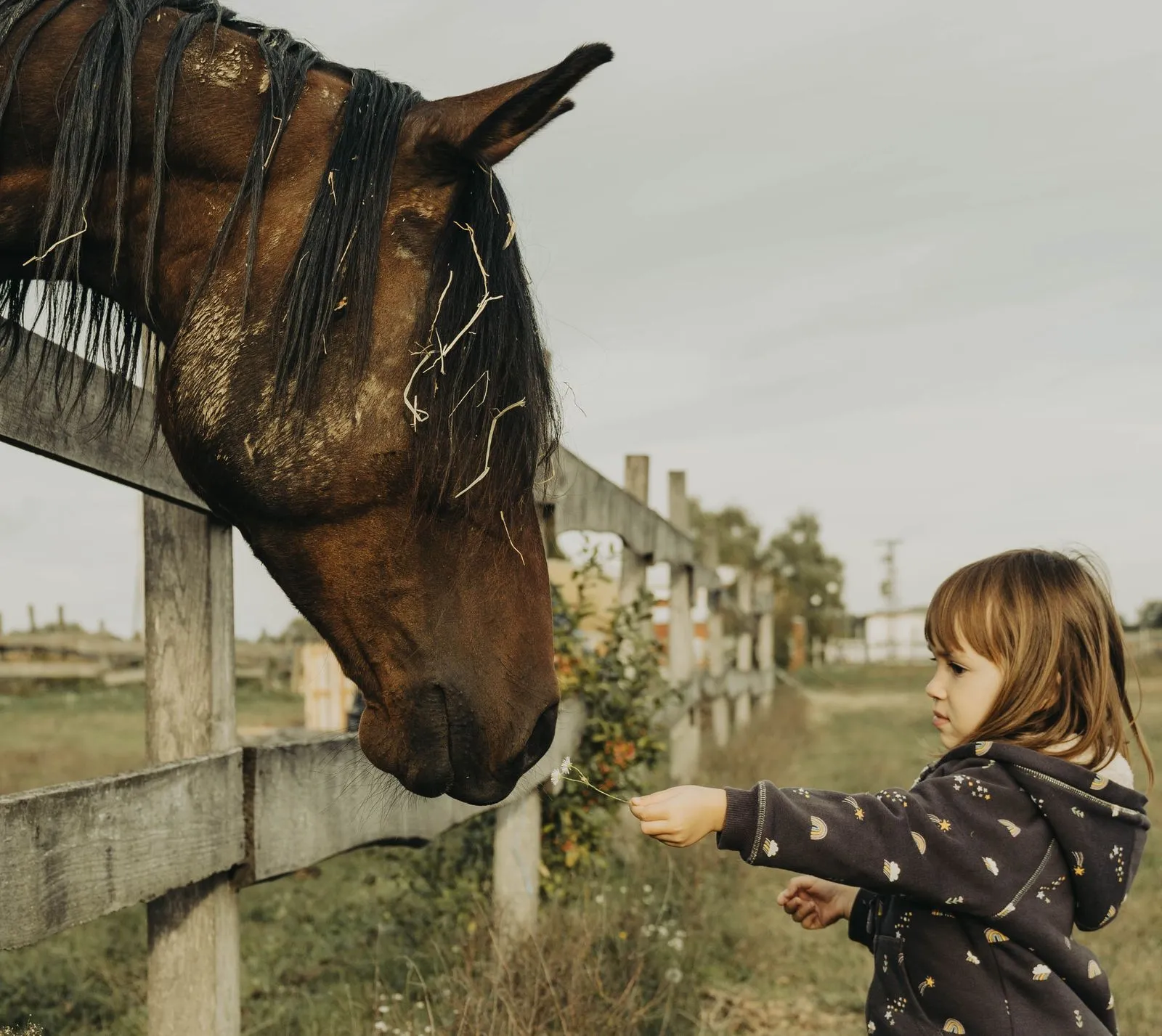
A first pony riding lesson is usually about getting comfortable, learning safe habits, and trying a few simple skills—not mastering everything at once. The instructor will guide your child through each step and adjust the pace to their confidence and experience. Knowing what may happen can help parents prepare, set realistic expectations, and make the visit feel less unfamiliar. Lesson routines vary, but many begin on the ground before moving to the saddle.
Meet the Pony and Instructor
The lesson often starts with a welcome and a brief check-in about your child’s experience, comfort level, and any concerns. The instructor may explain where to stand, how to approach the pony, and when it is safe to touch. Children should follow directions rather than walk up to a pony on their own. Calm, unhurried introductions help them notice the pony’s size and behavior without feeling pressured.
Your child may get a chance to gently stroke the pony’s shoulder or neck under supervision. The instructor can explain how to use a quiet voice and move carefully around the animal. Some ponies are more interested in attention than others, so children should learn to respect the pony’s space and signals. Parents can help by staying nearby while letting the instructor lead the interaction.
Get Ready Safely
Before riding, the instructor will check that your child has suitable clothing and properly fitted safety equipment. A certified riding helmet is essential; ask the school whether it provides one or whether you should bring your own. Long pants and sturdy, closed-toe shoes with a small heel are commonly recommended. Avoid loose scarves, dangling jewelry, and anything that could catch on tack.
The instructor may introduce the saddle, bridle, stirrups, and other equipment in simple terms. Your child does not need to know how to tack up for a first ride, but understanding what each item does can make the pony feel less mysterious. Staff should handle equipment checks and confirm that the pony is ready. If something feels uncomfortable or does not fit, tell the instructor before mounting.
Practice Basic Riding Skills
With the pony held or closely supervised, the instructor will help your child mount using a mounting block or other safe method. They may show how to sit upright, look ahead, keep legs relaxed, and hold the reins without pulling. The instructor will usually explain how to ask the pony to walk, turn, or halt using clear, gentle cues. Expect reminders and demonstrations as your child gets used to balancing in the saddle.
A beginner lesson commonly stays at a walk, with the instructor leading the pony or walking alongside. Your child might practice steering around markers, stopping at a chosen point, or maintaining a balanced position while the pony moves. The instructor will choose activities suited to the rider and pony. If your child feels nervous, they can pause, ask questions, or finish with a shorter ride; comfort and safety matter more than covering a set list of skills.
Finish With a Calm Wrap-Up
At the end, the instructor will help your child dismount safely and may invite them to thank or gently pat the pony. Depending on the school’s routine, children may watch the pony being untacked or learn a simple care step, such as brushing under supervision. They should not feed the pony unless staff explicitly allows it, since some treats may be unsuitable or unsafe.
Use the wrap-up to ask what your child practiced, what went well, and what they can work on next time. A first lesson can bring excitement, nerves, or a mix of both, and progress may look different for every child. Capitol Pony School can explain its lesson routine and what to bring when you contact the school.
A first pony lesson typically combines a supervised introduction, a safety check, and a few beginner riding exercises at a comfortable pace. Prepare your child with practical clothing and encourage them to speak up if they feel unsure. Ask the school about its equipment and arrival instructions before the visit so your child can focus on meeting the pony.